India’s Ancient Wisdom Traditions: A Guide to the Living Knowledge System
Tags: ancient India, spirituality, Vedic wisdom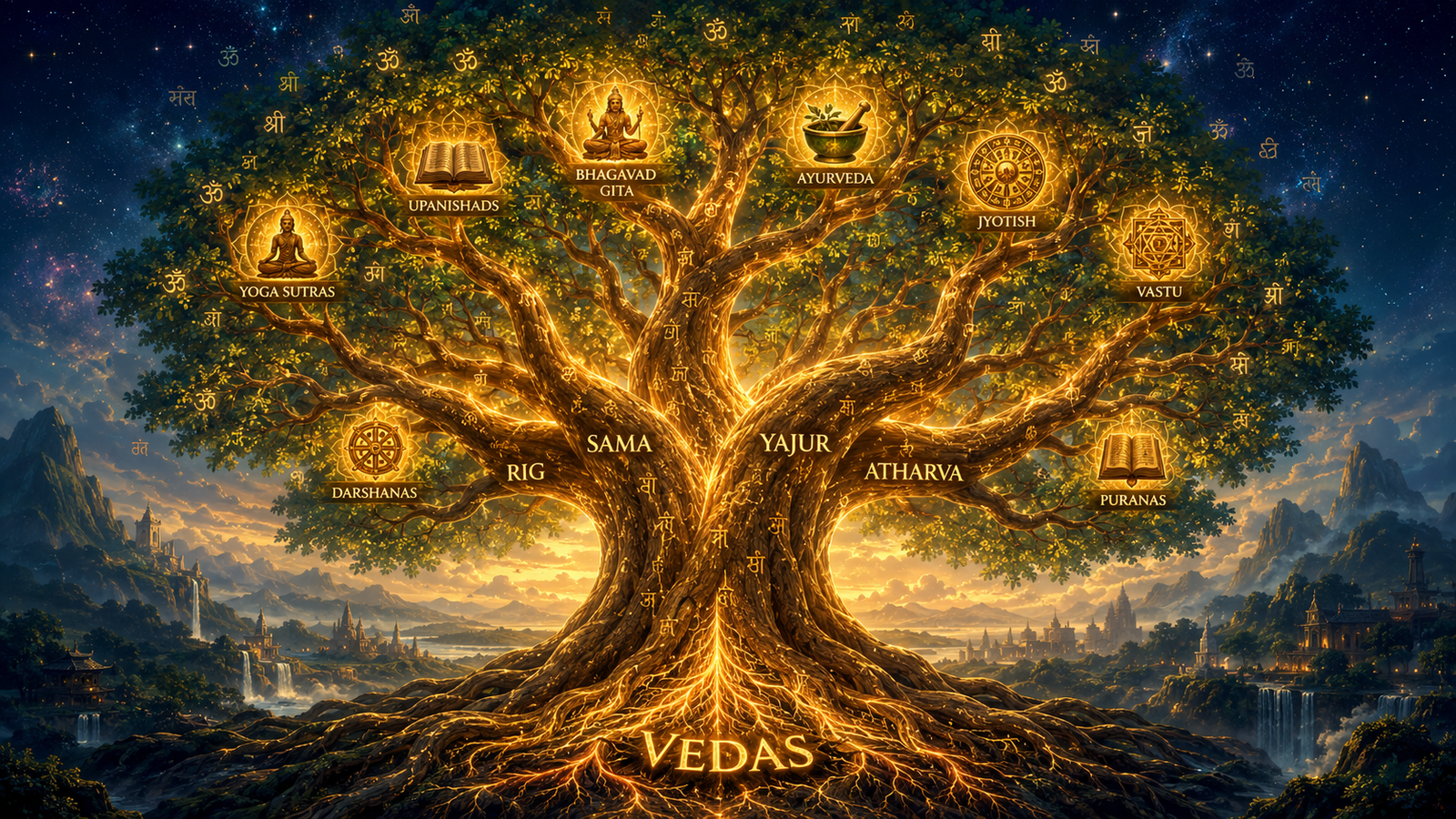
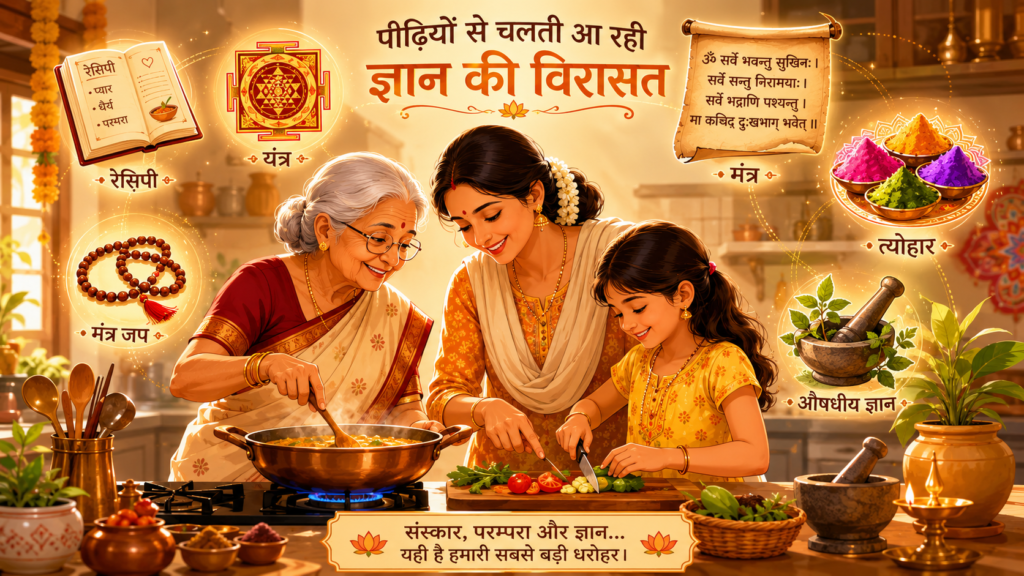
Somewhere in India right now, a grandmother is making chai exactly the way her mother taught her — and her mother’s mother before that. The proportions of ginger, the timing of the cardamom, the exact moment to add the milk — all of it passed down through generations without a recipe card.
This is how India’s most profound wisdom has always traveled: not through books and institutions, but through lived transmission — from one conscious being to another, embedded in daily life, ritual, story, and practice.
The Four Primary Knowledge Streams
| Veda | Focus |
|---|---|
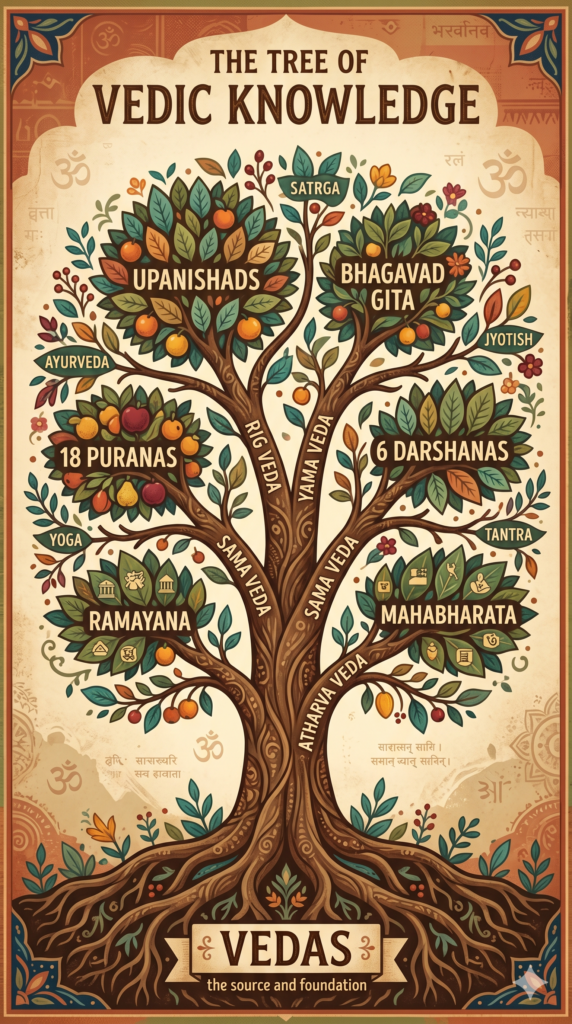
| Rig Veda | Hymns, cosmology, and the nature of divine beings. The oldest and largest. |
| Sama Veda | Musical arrangements of Rig Vedic hymns; the science of sacred sound |
| Yajur Veda | Ritual formulas and procedures; the science of sacred action |
| Atharva Veda | Practical knowledge, including medicine, healing, and daily life wisdom |
The Six Darshanas — Schools of Indian Philosophy
| Darshana | Focus |
|---|---|
| Nyaya | Logic and epistemology — how do we know what we know? |
| Vaisheshika | Atomic theory and categories of existence — remarkably similar to modern physics |
| Samkhya | Analysis of consciousness and matter; foundation of yoga philosophy |
| Yoga | The practical science of controlling the mind (Patanjali’s eight limbs) |
| Purva Mimamsa | The science of Vedic ritual and dharmic action |
| Vedanta (Uttara Mimamsa) | The crown of Indian philosophy — the nature of Brahman, Atman, and liberation |
The Three Paths to Liberation (Moksha)
Jnana Yoga — The Path of Knowledge
For those whose primary nature is intellectual and contemplative. Liberation through direct inquiry into the nature of reality and self. “Who am I?” is the central question. Best exemplified by Ramana Maharshi and Adi Shankaracharya.
Bhakti Yoga — The Path of Devotion
For those whose primary nature is emotional and loving. Liberation through complete surrender to the divine in a personal form. Best exemplified by Mirabai and Ramakrishna Paramahamsa.
Karma Yoga — The Path of Action
For those whose primary nature is active and engaged in the world. Liberation through selfless action — doing your duty completely without attachment to results. Best exemplified by the Bhagavad Gita’s message to Arjuna.
How to Access This Wisdom Today
- Start with one text: the Bhagavad Gita (Swami Chinmayananda’s commentary is ideal for beginners)
- Find a study group or online community aligned with a tradition
- Practice one path consistently — Bhakti through daily pooja and mantra, Jnana through self-inquiry, Karma through dedicated service
- Visit spiritual centers — Chinmaya Mission, Ramakrishna Mission, Art of Living, Isha Foundation — all make this wisdom accessible without requiring renunciation
This wisdom isn’t museum-piece history. It’s a living tradition — breathing, evolving, and waiting for your genuine inquiry to meet it.